
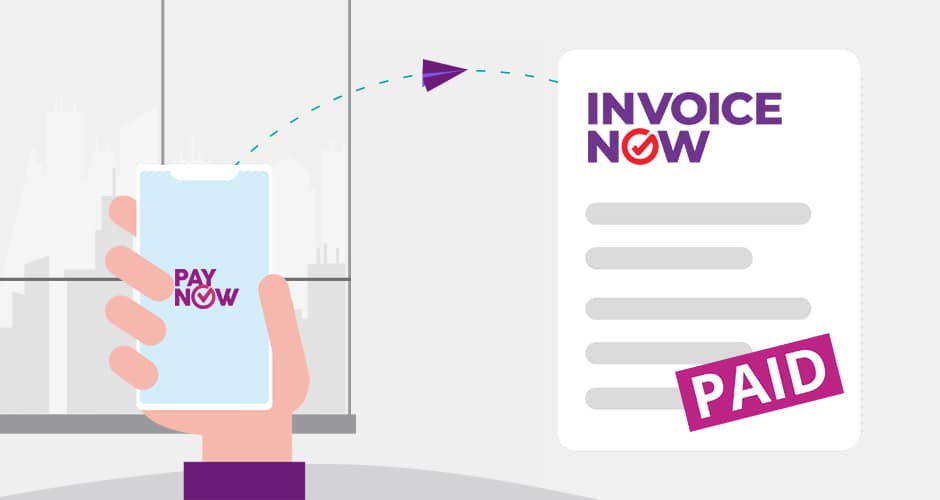
InvoiceNow Is Part of a Much Bigger Digital Shift
For many Singapore business owners, InvoiceNow may initially sound like another change to the way invoices are created and sent. Instead of preparing an invoice as a PDF, attaching it to an email and sending it manually to a customer, businesses can transmit structured invoice information electronically through Singapore’s nationwide InvoiceNow network. On the surface, the difference may appear mainly administrative. However, Singapore’s expanding InvoiceNow requirements represent something much larger than a change in invoicing format. They reflect the country’s continuing shift towards more connected, structured and digital financial processes, where information can move directly between business systems with less reliance on manual data entry.
That shift became considerably more important in 2026. Since 1 April 2026, businesses applying for voluntary GST registration are required to comply with the GST InvoiceNow Requirement, regardless of their incorporation date or business structure. Singapore has also announced that the requirement will progressively extend to the remaining GST-registered business population between April 2028 and April 2031. Existing GST-registered businesses will be brought into the system in phases based on their total annual supplies, while new compulsory GST registrants will come under the requirement from April 2028. IRAS has encouraged businesses to prepare early rather than waiting for their respective mandatory implementation dates.
This matters because InvoiceNow works differently from simply emailing a digital document. An invoice saved as a PDF may be digital in the everyday sense, but the information contained inside it often still needs to be processed manually. Someone receiving the invoice may need to enter the supplier name, invoice number, amount, GST information and other details into an accounting system. InvoiceNow instead allows businesses to send and receive invoices in a structured digital format based on the international Peppol standard. The information can therefore move more directly between compatible business systems. IRAS and IMDA have highlighted potential benefits including reduced manual processing, fewer errors, shorter payment cycles and improved productivity.
For business owners, the important development is not simply that invoices are becoming electronic. Businesses have been sending electronic invoices and PDFs for years. The more significant change is that financial information is becoming increasingly structured and capable of moving between systems without being repeatedly re-entered by people. That can change how accounting teams work, how businesses maintain records and how financial information is eventually prepared for tax and audit purposes.
This is part of a broader evolution in the way companies operate. Many businesses have already moved from physical documents to cloud accounting systems, online banking, digital payment platforms, payroll software, point-of-sale systems and electronic approval processes. InvoiceNow adds another layer to that transformation by connecting invoicing more directly with digital business systems and, under the GST InvoiceNow Requirement, with tax administration.
For Singapore SMEs, this creates both an opportunity and a challenge. The opportunity is greater efficiency. Employees can potentially spend less time manually entering invoice information, checking duplicated data and correcting avoidable mistakes. The challenge is that businesses need reliable processes behind the technology. A digital system can transmit information efficiently, but it cannot automatically guarantee that the information entered into that system was correct in the first place.
That distinction is important.
Digitalisation can improve a strong financial process.
It can also make a weak financial process operate faster.
As Singapore continues expanding InvoiceNow, business owners therefore have an opportunity to look beyond the immediate compliance requirement and ask a broader question: Are our financial processes actually ready for a more connected digital environment?
Digital Invoicing Does Not Automatically Mean Better Financial Controls
One of the easiest mistakes businesses can make during digital transformation is assuming that automation automatically creates stronger controls. A company replaces spreadsheets with accounting software, introduces electronic invoices, automates payment processes and begins storing documents in the cloud. Because everything looks more sophisticated, management may naturally feel that the financial process has become more reliable.
But technology and internal controls are not the same thing.
Consider a company where one employee can create a new supplier, enter an invoice and approve a payment without independent review. Moving those activities from paper forms into an online system may make the process faster, but the underlying control weakness remains. The same individual still has excessive control over several stages of the transaction.
Another business may automate invoice processing but fail to maintain accurate supplier information. If incorrect bank details or tax information enter the system, automation could process that incorrect information repeatedly. A company might also receive invoices digitally while maintaining weak procedures for confirming whether the goods or services were actually received. Again, the invoice may be processed more efficiently, but the fundamental business control has not improved.
This is why Singapore’s InvoiceNow transition should encourage businesses to review processes rather than simply purchase compatible software.
The GST InvoiceNow Requirement involves more than sending sales invoices electronically. Businesses within the requirement must transmit specified invoice data relating to transactions reported in their GST returns. IRAS identifies relevant transactions including standard-rated supplies, zero-rated supplies, exempt supplies, standard-rated purchases and zero-rated purchases. Depending on the transaction, the relevant information can come from invoices, tax invoices, receipts, debit notes, credit notes and other equivalent documents.
When financial information is increasingly structured and transmitted electronically, the quality of the underlying data becomes particularly important.
A wrong customer code is still wrong.
An incorrectly recorded GST treatment is still incorrect.
A duplicate transaction remains a duplicate transaction.
An unauthorised purchase does not become legitimate simply because the invoice travelled through a sophisticated digital network.
Businesses therefore need to think about the controls surrounding their digital financial processes. Who is authorised to create or amend supplier information? Who approves purchases? How are invoices matched against supporting documents? Who reviews unusual transactions? How frequently are bank and ledger balances reconciled? What happens when an invoice is rejected or contains incorrect information? Are responsibilities appropriately separated between employees?
These questions may not sound as exciting as implementing a new digital platform, but they determine whether technology actually improves financial management.
For auditors, reliable digital information can potentially make certain aspects of the audit process more efficient. Better organised records and clearer transaction trails can make supporting information easier to obtain and understand. However, auditors still need to assess whether financial information is reliable and obtain sufficient appropriate audit evidence. Technology does not remove the need for professional judgement, nor does it eliminate the possibility of error, inappropriate transactions or weaknesses in internal processes.
This creates an important lesson for business owners.
The goal of digitalisation should not simply be to eliminate paper.
The goal should be to create better processes.
A company that previously maintained poor records in filing cabinets will not necessarily become financially well managed simply because those records have moved to the cloud. Likewise, a company that struggled with inaccurate invoice information will not automatically solve the problem by transmitting invoices electronically. Management needs to understand why errors occur and improve the processes responsible for creating, reviewing and approving financial information.
Singapore’s InvoiceNow transition gives businesses a practical reason to undertake that review now.
Better Data Could Change How Businesses Prepare for Compliance and Audit
One of the most interesting aspects of InvoiceNow is what it could mean for the relationship between daily business transactions and regulatory compliance. Traditionally, many SMEs have treated these as relatively separate activities. Employees run the business throughout the year, accountants record transactions, GST returns are prepared periodically, and auditors examine relevant financial information later. Each stage can involve extracting information from one system, preparing schedules, checking documents and transferring data into another process.
Greater digital integration has the potential to reduce some of this fragmentation.
IRAS has stated that transmitting invoice data through InvoiceNow can streamline compliance, reduce the amount of data preparation required for submissions and support faster GST refunds. The Government has also described e-invoicing as a way to reduce manual processing and errors while shortening payment cycles.
This does not mean that GST compliance or financial audits will suddenly become automatic. Businesses remain responsible for ensuring that their records and tax submissions are accurate. Auditors still need to perform the procedures required for an audit. However, better structured financial data can reduce some of the administrative friction surrounding these processes.
Consider the traditional invoice journey.
A supplier creates an invoice.
Someone converts it into a PDF.
The invoice is emailed.
The customer receives it.
Someone downloads the attachment.
Information is entered into another accounting system.
The invoice is saved somewhere for record keeping.
Later, the accounting team retrieves information for reconciliation.
Later still, supporting information may need to be located again for tax preparation or audit purposes.
Every manual step creates another opportunity for delays, duplicate work or mistakes.
Structured digital invoicing can reduce some of those steps by allowing information to move more directly between compatible systems. For businesses processing large numbers of transactions, even relatively small efficiency improvements can become meaningful when repeated thousands of times throughout the year.
Singapore is clearly expecting this system to become significantly more widespread. As part of the 2026 expansion, the Government announced that all GST-registered businesses will eventually be brought under the requirement, with the remaining population progressively onboarded between 2028 and 2031. The expansion is expected to bring around 90,000 additional businesses onto InvoiceNow.
The transition is also being supported financially. The Government announced GST InvoiceNow transition funding of up to S$1,000 for SMEs and up to S$5,000 for larger businesses, alongside free InvoiceNow-ready solutions available to SMEs. IRAS updated its guidance in June 2026 to incorporate the new grants and continues encouraging businesses to prepare ahead of their mandatory implementation dates.
For businesses, however, preparation should involve more than determining which software to use.
This is an opportunity to examine how financial information moves through the organisation from the moment a transaction occurs.
A company can ask whether its customer and supplier records are accurate. It can review how invoices are created and approved. It can examine whether accounting entries are being made promptly rather than several months later. It can identify where employees are manually re-entering the same information into multiple systems. It can review whether supporting documentation can be retrieved easily. It can also assess whether reconciliations and management reviews are occurring consistently.
These improvements have benefits beyond InvoiceNow.
Better records make management reporting more useful because business owners receive information sooner. Better transaction controls can reduce errors. Better documentation can make GST preparation more efficient. Better organised financial information can also reduce unnecessary difficulty when the company eventually undergoes an audit.
This is where InvoiceNow becomes more than an invoicing story.
It represents part of a larger movement towards financial information becoming more structured, connected and timely. Singapore businesses that recognise this early can use the transition as an opportunity to improve the quality of their financial processes rather than viewing it solely as another compliance obligation.
The businesses that benefit most from digitalisation will not necessarily be those that adopt the greatest number of systems. They will be the businesses that combine useful technology with clear responsibilities, reliable data and effective internal controls.
InvoiceNow can change how an invoice travels.
The more important question is whether businesses are prepared to change what happens before and after that invoice is sent.
Automation Can Make Good Processes Better and Bad Processes Worse
One of the biggest attractions of digitalisation is automation. When businesses automate repetitive financial tasks, employees can spend less time entering information manually and more time on activities that require judgement, customer interaction or business planning. InvoiceNow is designed partly around this idea. Because invoices are transmitted in a structured digital format, information can flow between compatible systems without employees repeatedly extracting details from PDFs and entering them into accounting software. The Singapore Government has highlighted reduced manual processing, fewer errors, shorter payment cycles and improved productivity as some of the expected benefits of InvoiceNow.
For businesses processing hundreds or thousands of invoices, the potential efficiency improvement is significant. Consider an accounts team that currently receives supplier invoices through email. An employee may need to download each invoice, identify the supplier, enter the invoice number and amount into an accounting system, check the GST treatment, select the appropriate expense category, save the supporting document and send the transaction for approval. Even if each invoice requires only several minutes of manual work, the total amount of administrative time can become substantial when the same process is repeated throughout the year. Structured electronic invoicing can remove some of this repetitive work and reduce opportunities for simple data entry errors.
However, there is another side to automation that businesses should understand. Automation is extremely good at repeating a process. If the process is correct, that is an advantage. If the process contains a mistake, automation can potentially repeat that mistake just as efficiently. A business that incorrectly configures an accounting rule could apply the wrong treatment across many transactions before someone notices. Incorrect supplier information could flow through several systems. A poorly designed approval workflow could continue allowing inappropriate transactions even though the process appears sophisticated because everything happens electronically.
This is why businesses should avoid treating InvoiceNow implementation as purely an information technology project. The finance team, management and employees responsible for purchasing, sales and approvals should also be involved. Before automating a process, the business should understand how that process currently works. Who creates invoices? Who checks them? Who approves purchases? Who can amend supplier information? How are credit notes handled? How are exceptions investigated? Where does manual intervention still occur?
If these questions reveal weaknesses, implementing new technology provides an opportunity to redesign the process before those weaknesses become embedded in the new system.
Imagine a business where supplier invoices are currently approved through WhatsApp messages. An employee receives an invoice, sends a screenshot to a manager and receives a quick “OK” response. The company may technically have an approval process, but the evidence supporting that approval may be inconsistent and difficult to retrieve later. Simply introducing digital invoicing does not solve the problem. The business needs an approval workflow that records who approved the transaction, when approval occurred and what supporting information was considered.
Another company might discover that several employees can create new supplier records without independent verification. This creates the possibility of duplicated suppliers, incorrect information or potentially fraudulent changes. A better digital process could require supplier creation to be reviewed by another authorised employee before payments can be processed.
These are internal control questions rather than technology questions.
They also demonstrate why digital transformation and audit readiness are increasingly connected. Auditors need to understand relevant processes and obtain appropriate evidence when performing an audit. If transactions are processed electronically, the audit trail increasingly exists within digital systems rather than physical files. Businesses need to ensure that those systems preserve reliable records of transactions, approvals and changes.
The transition towards InvoiceNow therefore provides Singapore businesses with an opportunity to review whether their internal controls have kept pace with their technology. A company may have replaced almost every physical document in its finance department while continuing to use processes designed for a paper-based environment. As financial information becomes more automated and connected, those processes should evolve as well.
The objective is not to introduce complicated controls simply for the sake of having them. Controls should reflect the size and complexity of the organisation. A small company with five employees will naturally have different processes from a company employing hundreds of people. What matters is that management understands where errors or inappropriate transactions could occur and introduces reasonable measures to reduce those risks.
Automation can then strengthen those processes rather than simply making them faster.
Better Digital Records Could Make Audit Preparation Less Painful
For many businesses, preparing for an annual audit can become an exercise in locating information.
The auditor requests an invoice.
Someone searches an email account.
The supporting purchase order is stored somewhere else.
The payment confirmation needs to be downloaded from the bank.
An approval might be sitting inside an old WhatsApp conversation.
Another employee remembers why the transaction happened but has since left the company.
None of these problems necessarily means that the underlying transaction is incorrect. The difficulty is demonstrating clearly what happened and providing the supporting evidence required for the audit.
This is one reason good record keeping matters.
An audit does not begin with the assumption that every number in the financial statements is wrong. However, auditors need sufficient appropriate evidence to support their conclusions. When financial records are well organised and supporting documentation can be retrieved easily, the company can respond to audit requests more efficiently. When information is fragmented across email accounts, spreadsheets, physical files and different systems, even straightforward requests can take considerably longer to resolve.
Digitalisation has the potential to improve this situation.
Structured invoicing creates more consistent transaction information. Accounting systems can connect invoices to ledger entries. Digital approval workflows can preserve records showing who authorised transactions. Electronic payment information can be matched against accounting records. Supporting documents can be stored alongside the relevant transactions rather than maintained separately.
None of these developments eliminates the need for an audit. They can, however, improve the quality and accessibility of the information available when audit procedures are performed.
InvoiceNow also strengthens the connection between transaction records and tax administration. Under the GST InvoiceNow Requirement, GST-registered businesses covered by the phased implementation must use InvoiceNow-Ready Solutions to transmit specified invoice data directly to IRAS. The requirement already applies to businesses applying for voluntary GST registration from 1 April 2026, while the remaining GST-registered population will progressively come under the requirement from April 2028 through April 2031.
For business owners, this creates another reason to ensure financial information is correct at the source.
Historically, some companies may have relied heavily on accountants to clean up records after transactions occurred. Information would accumulate throughout the year, and significant reconciliation or correction work might take place when GST returns, financial statements or audit schedules needed to be prepared. That approach becomes increasingly inefficient as financial processes become more connected.
Businesses should instead aim to get transactions right when they occur.
Customer information should be accurate when invoices are issued.
Supplier information should be verified when vendors are created.
GST treatment should be considered when transactions are recorded.
Supporting documents should be stored systematically.
Bank accounts and other balances should be reconciled regularly.
Errors should be investigated when they are discovered rather than accumulated until year end.
This creates a healthier financial reporting process regardless of whether the business is currently subject to an audit.
It can also change the audit experience significantly. Instead of spending the beginning of an audit correcting accounting records and searching for missing information, management and the audit team can focus more quickly on the areas that actually require professional attention.
Good digital records do not guarantee that an audit will be quick or free from questions. Auditors may still need additional evidence, investigate unusual transactions or discuss significant accounting matters with management. The difference is that the basic information supporting those discussions is more readily available.
There is also an important distinction between having data and having reliable data.
A business may have every invoice stored digitally and still have poor financial records if transactions have been classified incorrectly. A company could have an advanced accounting system while failing to reconcile important balances. Thousands of digital documents provide little comfort if nobody checks whether the accounting information agrees with them.
Audit readiness therefore depends on both documentation and financial discipline.
The InvoiceNow transition should encourage businesses to think about both.
Real Time Information Can Help Management, Not Just Regulators
Much of the conversation around InvoiceNow naturally focuses on compliance because GST-registered businesses are progressively being required to transmit invoice data to IRAS. However, businesses should not overlook another potential benefit of better digital financial processes: management can gain access to more timely information.
Financial information is most useful when it arrives early enough to influence a decision.
Consider a business owner receiving financial statements several months after the reporting period has ended. The information may be accurate, but its usefulness for day-to-day decision making is limited. If the company experienced a sharp increase in supplier costs three months ago, management ideally should have recognised that trend when it began rather than discovering it during year-end accounting.
The same applies to customer payments.
A business can appear profitable while experiencing cash flow difficulties because customers are taking too long to pay. If management reviews receivables regularly, it can identify overdue balances and take action earlier. If the information is only examined occasionally, cash flow pressure may become serious before the problem receives attention.
Digital systems can help shorten this information gap.
When invoices are generated and received electronically and transactions flow into accounting systems more efficiently, management potentially has access to more current financial information. The business can monitor sales, expenses, receivables and other indicators without waiting for large amounts of manual data entry to be completed.
InvoiceNow is also intended to support improvements in billing and payment processes. IRAS notes that adopting InvoiceNow can facilitate record keeping, billing and payments, while the broader initiative is intended to reduce data preparation efforts and enable faster GST refunds.
For SMEs, this can be particularly valuable because owners often make decisions quickly.
Should the business hire another employee?
Can it afford new equipment?
Is a product still profitable after supplier prices increased?
Are customers paying more slowly?
Is cash flow strong enough to support expansion?
Should management reduce expenditure?
These decisions are easier when financial information reflects what is happening now rather than what happened several months ago.
However, technology alone cannot guarantee useful management information.
If invoices are recorded promptly but expenses are classified inconsistently, reports may still be misleading.
If bank reconciliations are months behind, the cash balance in the accounting system may not be reliable.
If customer records contain duplicates, receivables reports can become confusing.
If management never reviews the information produced by the system, faster reporting achieves very little.
Digitalisation therefore needs to be accompanied by financial discipline.
Businesses should decide which information management actually needs and establish a routine for reviewing it. A small SME may not need a complicated dashboard containing dozens of financial indicators. Regular visibility over revenue, gross margins, major expenses, cash balances and outstanding receivables may already provide significant value.
Larger or more complex businesses may require more detailed reporting across departments, products, projects or locations.
The principle remains the same.
Financial data should help management understand the business, not simply satisfy compliance requirements.
This is perhaps one of the most important opportunities created by Singapore’s broader digitalisation of financial processes. Businesses already need to maintain accounting records. GST-registered companies already need to meet tax obligations. Companies subject to statutory audit already need to provide financial information and supporting documentation to their auditors.
If digitalisation allows the same underlying information to become more accurate, timely and accessible, businesses can use it for more than compliance.
They can use it to run the company better.
The growing adoption of InvoiceNow suggests that this direction will become increasingly normal in Singapore. The Government expects around 90,000 additional businesses to join the network through the expansion to all GST-registered businesses, adding to more than 63,000 businesses already using InvoiceNow when the 2026 expansion was announced. The strong interest is already visible, with the July 2026 InvoiceNow Fair reaching full registration capacity.
Businesses therefore have time to prepare, but preparation should not begin and end with choosing an InvoiceNow-Ready solution.
They should examine the quality of their financial data.
They should review internal controls.
They should identify unnecessary manual processes.
They should improve how supporting documentation is maintained.
And they should consider whether the information generated by their accounting systems is actually being used by management.
Singapore’s move towards structured digital invoicing may eventually make the administrative side of finance considerably more efficient. But the greatest benefit will come when businesses use that transition to improve the financial processes surrounding the technology.
The future finance function may involve much less manual data entry.
That does not mean it will require less oversight.
In many ways, it will require better oversight because businesses will need people who can understand the information produced by increasingly automated systems, identify unusual results, maintain appropriate controls and make sound decisions from the data available.
InvoiceNow can help information move faster.
Businesses still need to make sure it is moving in the right direction.
Digitalisation Will Not Remove the Need for Human Oversight
As Singapore businesses adopt more digital financial tools, it can be tempting to imagine a future where accounting processes operate almost entirely on their own. Invoices can already be generated automatically, payments can be matched against transactions, recurring expenses can be recorded by accounting software, and financial reports can be produced with relatively little manual preparation. InvoiceNow takes this development further by allowing structured invoice information to move directly between compatible systems. For businesses accustomed to manually preparing invoices, sending PDFs through email and entering supplier information into accounting software, the potential efficiency improvement is significant. However, greater automation does not reduce the importance of human oversight. In many cases, it makes effective oversight even more important because mistakes can move through automated systems much faster than they would through manual processes.
A digital system can confirm that an invoice contains all required data fields, but it cannot necessarily determine whether the underlying business transaction makes commercial sense. An accounting platform may correctly record an invoice for S$50,000, but management still needs to know whether the purchase was authorised, whether the goods or services were actually received, and whether the amount agrees with the company’s contractual arrangements. Similarly, an automated system may categorise a transaction based on predetermined rules, but someone still needs to determine whether those rules remain appropriate when the nature of the business changes. Technology can improve the processing of financial information, but responsibility for that information ultimately remains with the business.
This distinction becomes particularly important as Singapore’s GST InvoiceNow Requirement expands. Businesses covered by the requirement must transmit specified invoice data to IRAS through InvoiceNow-Ready Solutions. The information includes relevant transactions reported in GST returns, including standard-rated, zero-rated and exempt supplies as well as relevant purchases. (iras.gov.sg) The fact that information can be transmitted digitally does not mean businesses can stop reviewing the accuracy of their transactions. If inaccurate information enters the accounting system, greater connectivity can simply allow that inaccurate information to travel further.
Businesses therefore need processes for reviewing exceptions rather than attempting to check every transaction manually. Technology is particularly useful when it handles routine transactions consistently and directs unusual situations to employees who can investigate them. A company might configure its system to highlight duplicate invoice numbers, unexpected changes in supplier bank details, unusually large purchases or transactions that exceed established approval limits. Employees can then concentrate their attention on these exceptions rather than manually reviewing every ordinary invoice.
This represents a different way of thinking about financial controls. Traditionally, businesses may have relied heavily on employees physically checking documents. In a more digital environment, some of those checks can be built into systems. Approval limits can be configured automatically. Access to certain functions can be restricted. Changes to important master data can be logged. Transactions can be matched electronically. Reports can identify unusual patterns. The purpose of internal controls remains the same, but the way those controls operate evolves alongside technology.
Management also needs to consider access rights. When businesses first adopt accounting software, employees are sometimes given broad access because it is convenient. As the company grows, those permissions may never be reviewed. An employee who originally handled several responsibilities because the business had only a small finance team may continue having access to create suppliers, record invoices, approve transactions and process payments even after the organisation has expanded.
Digital transformation creates a good opportunity to reconsider these arrangements.
Who genuinely needs access to financial information?
Who should be allowed to create or modify suppliers?
Who can approve payments?
Who can change accounting entries?
Who reviews unusual transactions?
Who can access sensitive financial reports?
These questions are part of good governance regardless of whether the company uses InvoiceNow. However, they become increasingly important as more financial activity takes place digitally.
Human oversight also remains essential when businesses undergo an audit. Auditors may use technology and data analysis during their work, but professional judgement remains central to determining whether the evidence obtained is sufficient and appropriate. Management similarly needs people who understand the business well enough to explain significant transactions and respond when unusual matters arise.
The future of finance is therefore unlikely to involve humans disappearing from the process. Instead, the nature of their work will change.
Employees may spend less time entering invoice numbers manually.
They may spend more time investigating exceptions.
They may spend less time searching through filing cabinets.
They may spend more time reviewing data quality.
They may spend less time preparing repetitive schedules.
They may spend more time understanding what the financial information actually means.
For Singapore SMEs struggling with manpower constraints, this could be one of the most valuable outcomes of digitalisation. The objective is not necessarily to eliminate finance roles but to use employees more effectively. Administrative tasks that can be performed reliably by technology should increasingly be automated, while people focus on areas requiring judgement, communication and decision making.
That is a much more sustainable approach than simply layering new software on top of old processes.
Businesses Should Prepare Before InvoiceNow Becomes Mandatory for Them
One advantage of Singapore’s phased InvoiceNow implementation is that many businesses have time to prepare. The requirement already applies to businesses applying for voluntary GST registration from 1 April 2026. The remaining GST-registered business population will progressively come under the requirement from April 2028 through April 2031, based on the applicable implementation phases. IRAS is encouraging businesses to onboard early so they can ensure their InvoiceNow-Ready Solutions are capable of transmitting the required invoice information successfully.
For existing businesses that are not yet required to participate, waiting until the final months before their mandatory implementation date may not be the best strategy. Preparation involves more than activating a feature inside accounting software. Businesses should first understand how invoicing currently works within their organisation and identify processes that may need improvement.
A useful starting point is examining the journey of a typical sales invoice.
How is the invoice created?
Where does customer information come from?
Who checks the invoice?
How is GST treatment determined?
Who can issue credit notes?
How is payment tracked?
How are corrections made?
The company can then perform a similar exercise for supplier invoices.
How are new suppliers created?
Who verifies supplier information?
Where are invoices received?
How are purchases approved?
How are invoices entered into the accounting system?
How are payments authorised?
How are supporting documents maintained?
This process mapping can reveal inefficiencies that businesses have gradually become accustomed to. Employees may be entering the same information into several systems. Different departments may maintain separate customer records. Invoice approvals may depend on emails or messaging applications. Supporting documents may be stored inconsistently. Accounting entries may be delayed because information needs to move manually between employees.
Businesses should use the InvoiceNow transition as an opportunity to eliminate unnecessary steps rather than simply recreating them digitally.
Data quality should receive particular attention.
If customer and supplier information is inconsistent, businesses should clean those records before connecting more systems to them. Duplicate suppliers should be investigated. Outdated customer information should be corrected. Accounting codes should be reviewed. Employees should understand how transactions are classified and how GST treatments are applied.
Businesses should also ensure their accounting solutions are capable of supporting the requirements that apply to them. IRAS states that businesses subject to the GST InvoiceNow Requirement need to use InvoiceNow-Ready Solutions to transmit invoice data.
There is financial support available for the transition as well. Applications for the GST InvoiceNow Transition Grants opened on 1 July 2026. Eligible SMEs can receive a S$1,000 transition grant, while eligible larger businesses can receive S$5,000. Additional support is available under the InvoiceNow Queen Bee Grant, subject to the applicable eligibility requirements. Free-of-charge solution packages are also available to help businesses transition.
The availability of support makes early preparation more practical, but businesses should avoid choosing technology based solely on whether funding is available. The system needs to suit the organisation’s actual operations. A solution that works well for a small professional services company may not necessarily meet the requirements of a retailer processing thousands of transactions or a business operating multiple entities.
Management should therefore consider both current and future needs.
Will transaction volumes increase?
Will the business open additional locations?
Will more employees need access?
Does the system integrate with existing accounting software?
Can approval workflows be configured appropriately?
Can supporting documentation be maintained systematically?
Can management obtain the reports it actually needs?
These questions help ensure that digitalisation supports the business beyond immediate compliance.
The strong interest among businesses suggests that many organisations are already thinking about the transition. An IRAS and IMDA webinar on adopting the GST InvoiceNow Requirement in July 2026 was fully subscribed, with the agencies continuing to emphasise the importance of preparing early.
For companies that undergo statutory audits, preparation can also include discussing significant system changes with their accounting and audit teams. If a business changes accounting software, modifies important financial processes or introduces significant automation, maintaining clear documentation about those changes can make future financial reporting and audit work easier.
Businesses should remember that the objective is not simply to become InvoiceNow compliant.
Compliance is the minimum requirement.
The greater opportunity is using the transition to create financial processes that are more accurate, efficient and useful to management.
Conclusion
Singapore’s InvoiceNow initiative may appear to be about changing the way businesses send and receive invoices, but its implications are much broader. The transition reflects a continuing shift towards financial information that is increasingly digital, structured and connected. As InvoiceNow becomes progressively mandatory for GST-registered businesses, companies will need to reconsider not only their invoicing software but also the processes surrounding financial transactions.
The benefits are potentially significant.
Manual data entry can be reduced.
Information can move between systems more efficiently.
Duplicate administrative work can be eliminated.
Financial records can become easier to organise.
Businesses may gain more timely visibility over transactions.
GST compliance processes may become more streamlined.
The Government expects InvoiceNow to reduce manual processing and errors, shorten payment cycles and support faster GST audits and refunds.
However, none of these benefits happen automatically.
Technology cannot compensate for weak financial processes.
If supplier information is inaccurate, digital systems can process inaccurate information efficiently.
If approvals are poorly designed, electronic workflows can preserve poor controls.
If accounting records are not reviewed regularly, automated transactions can accumulate errors before management notices them.
If employees have inappropriate system access, moving financial activity online does not remove the underlying risk.
The most important preparation for InvoiceNow is therefore not simply technological.
It is operational.
Businesses should understand how financial information moves through their organisation and identify where mistakes, delays or unnecessary manual work occur. Responsibilities should be clear. Approval processes should be appropriate. Accounting records should be maintained consistently. Reconciliations should happen regularly. Supporting information should be easy to retrieve.
These practices also contribute to better audit readiness.
A business with organised financial information can generally respond to audit requests more efficiently than one that begins searching for documents only when fieldwork starts. Digital records can improve accessibility, but businesses still need to ensure those records are complete and reliable.
The same information can also become more valuable to management.
If transactions are recorded accurately and promptly, business owners can obtain a clearer picture of revenue, expenses, receivables, cash flow and profitability. Instead of viewing accounting information purely as something required for GST filing, year-end reporting or audit purposes, management can use it to make better decisions throughout the year.
This may ultimately be one of the most valuable consequences of Singapore’s move towards more connected financial systems.
The business owner should not need to wait until year end to understand whether margins are declining.
Management should not discover six months later that customers have started paying more slowly.
Finance teams should not spend days reconstructing transactions that already occurred inside digital systems.
Auditors should not need to request information that exists somewhere within the organisation but cannot easily be located.
Good digital processes can reduce these problems, provided businesses design those processes properly.
The transition will also continue over several years. IRAS’s current schedule progressively extends the GST InvoiceNow Requirement across the GST-registered population from 2028 to 2031, after the earlier implementation for new voluntary registrants. This gives many businesses an opportunity to prepare deliberately rather than rushing to comply at the last moment.
At Audit Services Singapore, we understand that changes in financial technology can affect more than the accounting system itself. As businesses digitalise, reliable financial records, appropriate internal processes and effective controls remain essential to maintaining the quality of financial reporting and supporting a smoother audit process.
Businesses should therefore see InvoiceNow as more than another compliance deadline.
It is an opportunity to examine how financial information is created, approved, recorded and reviewed throughout the organisation.
The companies that approach the transition this way may gain considerably more than electronic invoicing.
They may reduce administrative work.
They may improve financial visibility.
They may strengthen internal processes.
They may become better prepared for audits and compliance requirements.
Most importantly, they may create a financial function that provides management with better information for running the business.
Singapore’s InvoiceNow push is changing how invoices move between businesses. The more important transformation could be what businesses choose to improve around them.